The challenge
The homeowners had a large finished basement with dark walls and recessed lighting, and wanted it to feel like a real theater: a screen big enough to fill the wall, sound that matched it, and a room that still worked for everyday TV and family time. A wall that size calls for a projector, and a projector needs the screen, the image and the room all lined up to look its best.
What we installed
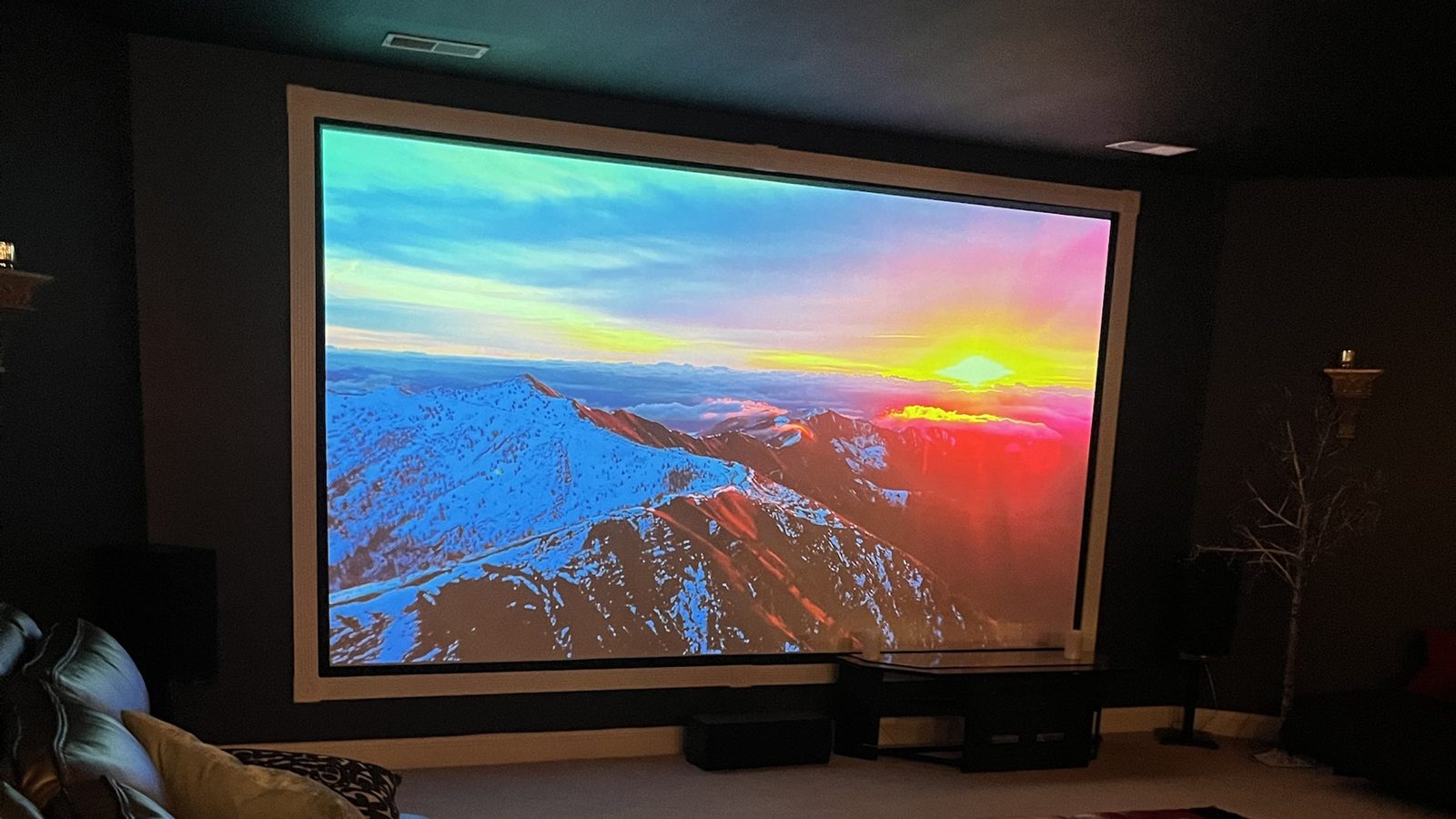
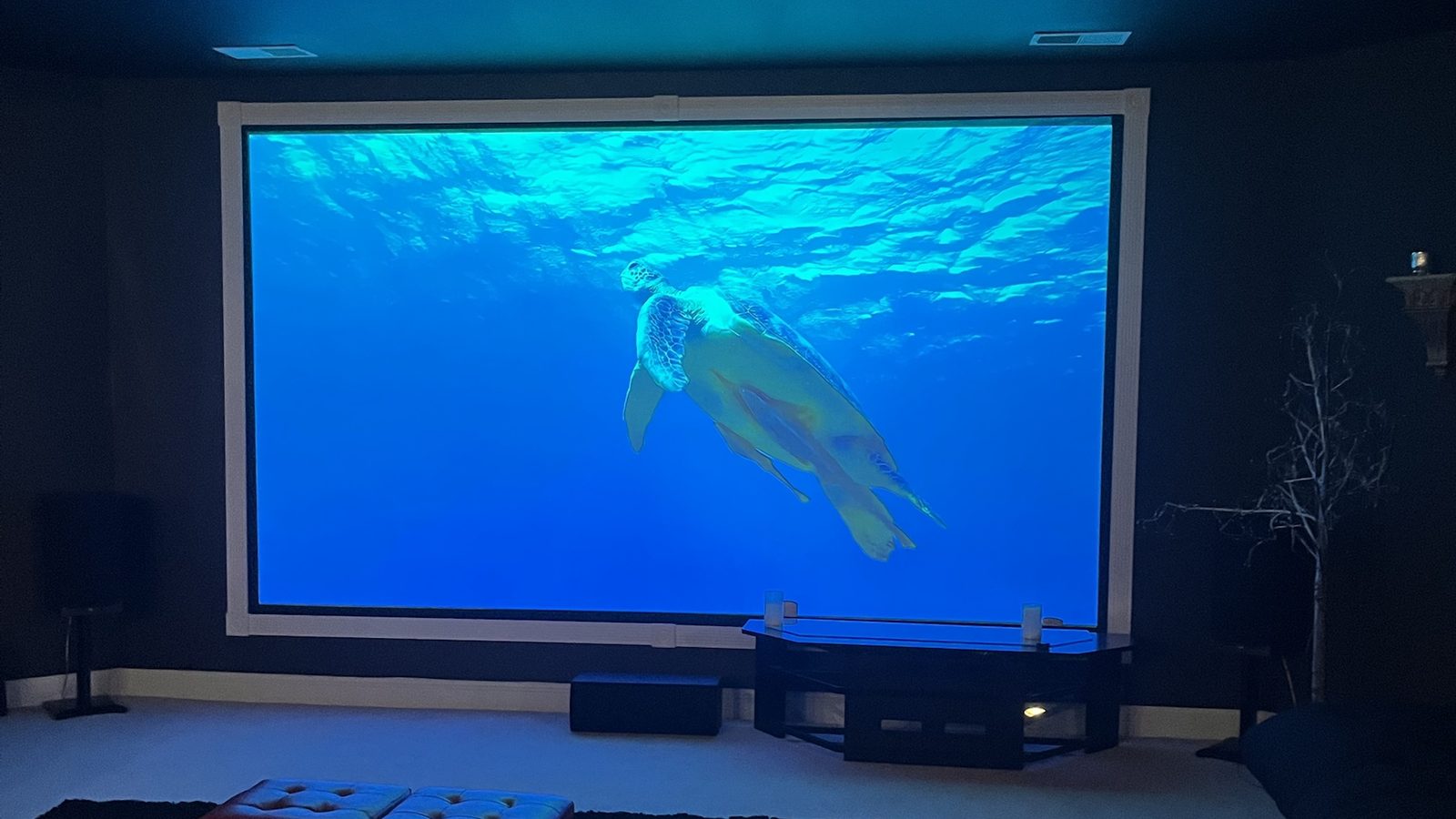
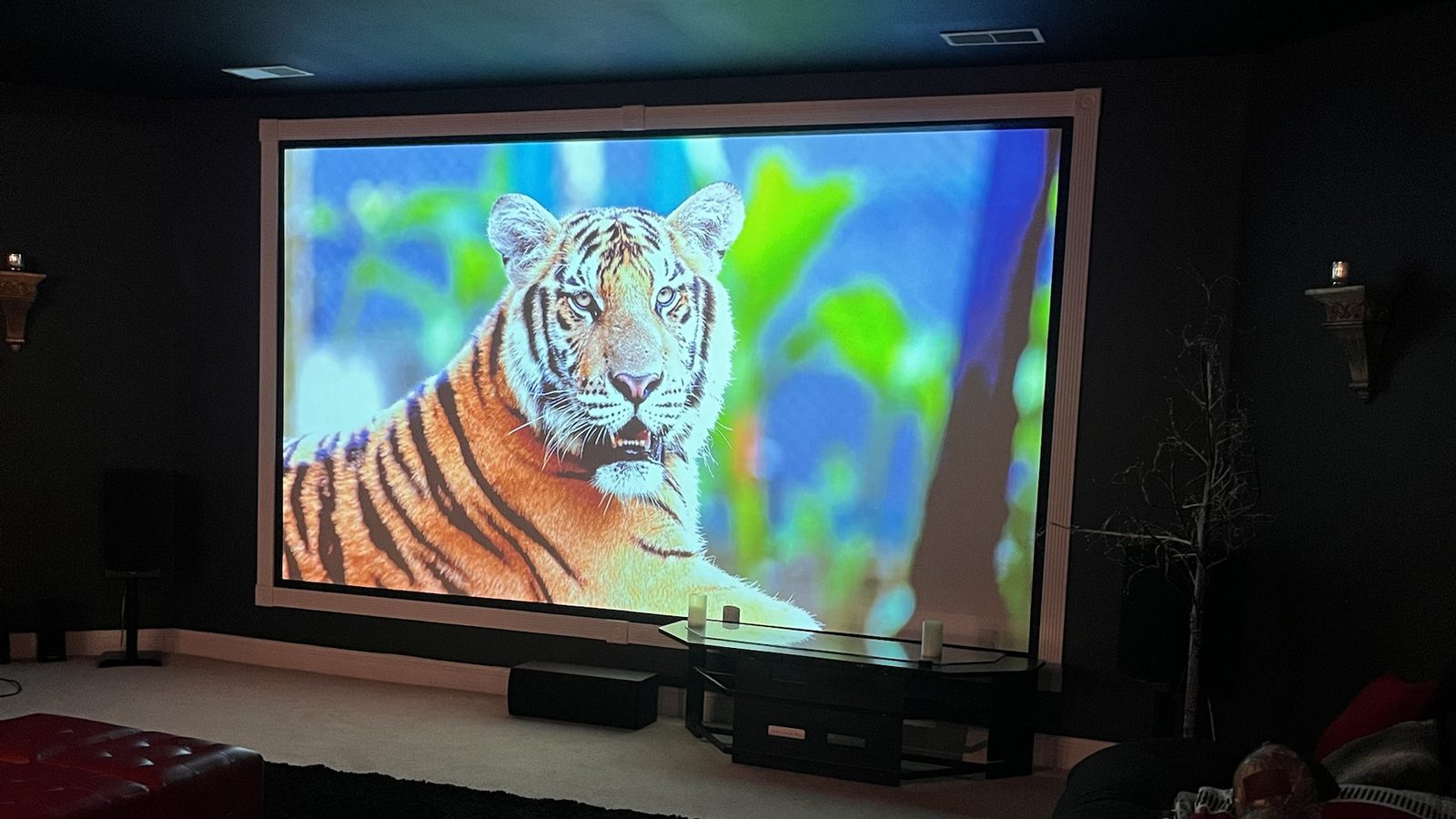
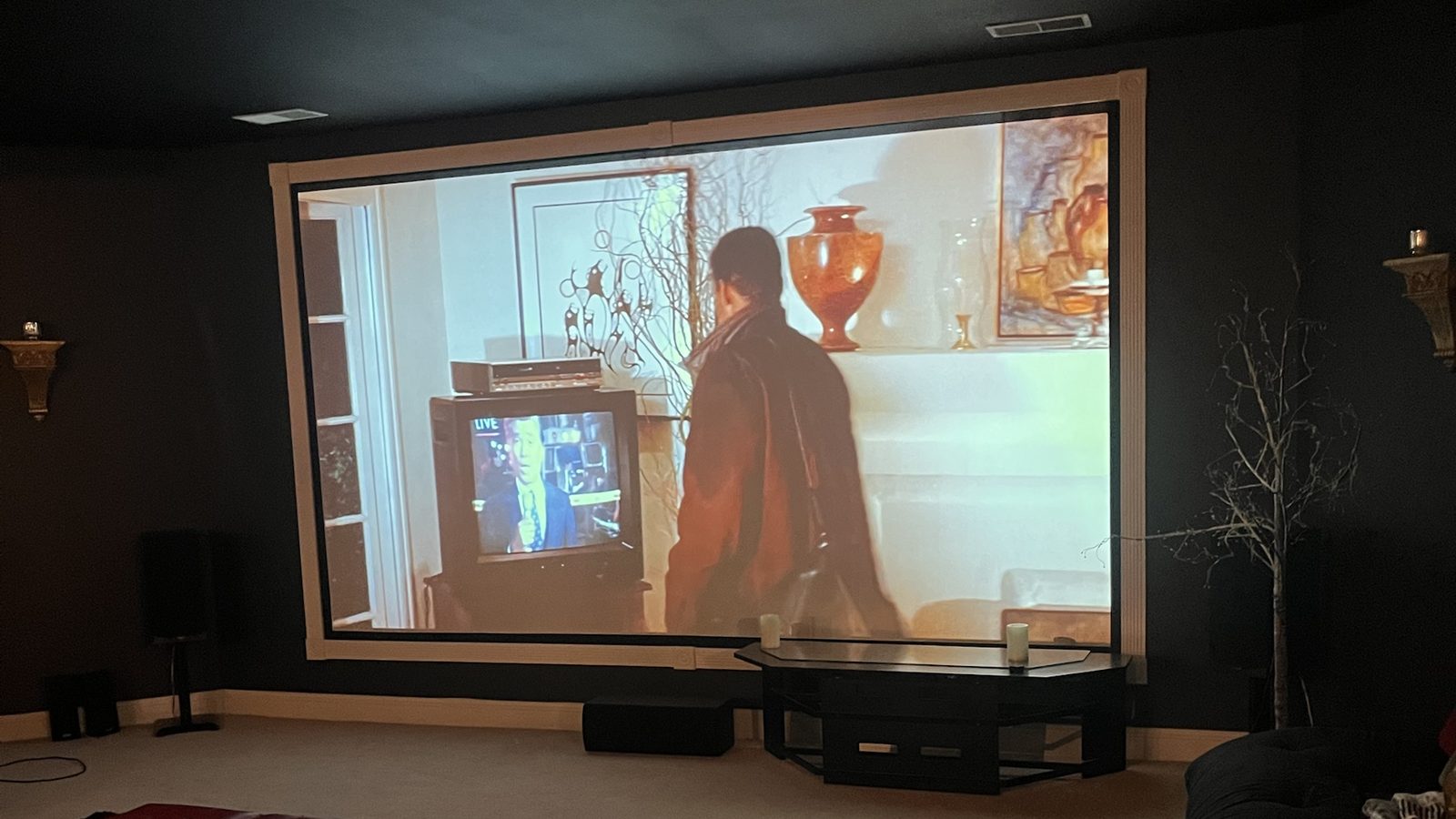
- A large fixed-frame projection screen mounted level and centered on the accent wall, with a trim frame that sets it off like a window.
- A ceiling-mounted projector on an extension pole, with the power and video cables bundled down the pole, aligned so the image fills the frame edge to edge, with focus, lens and picture settings dialed in.
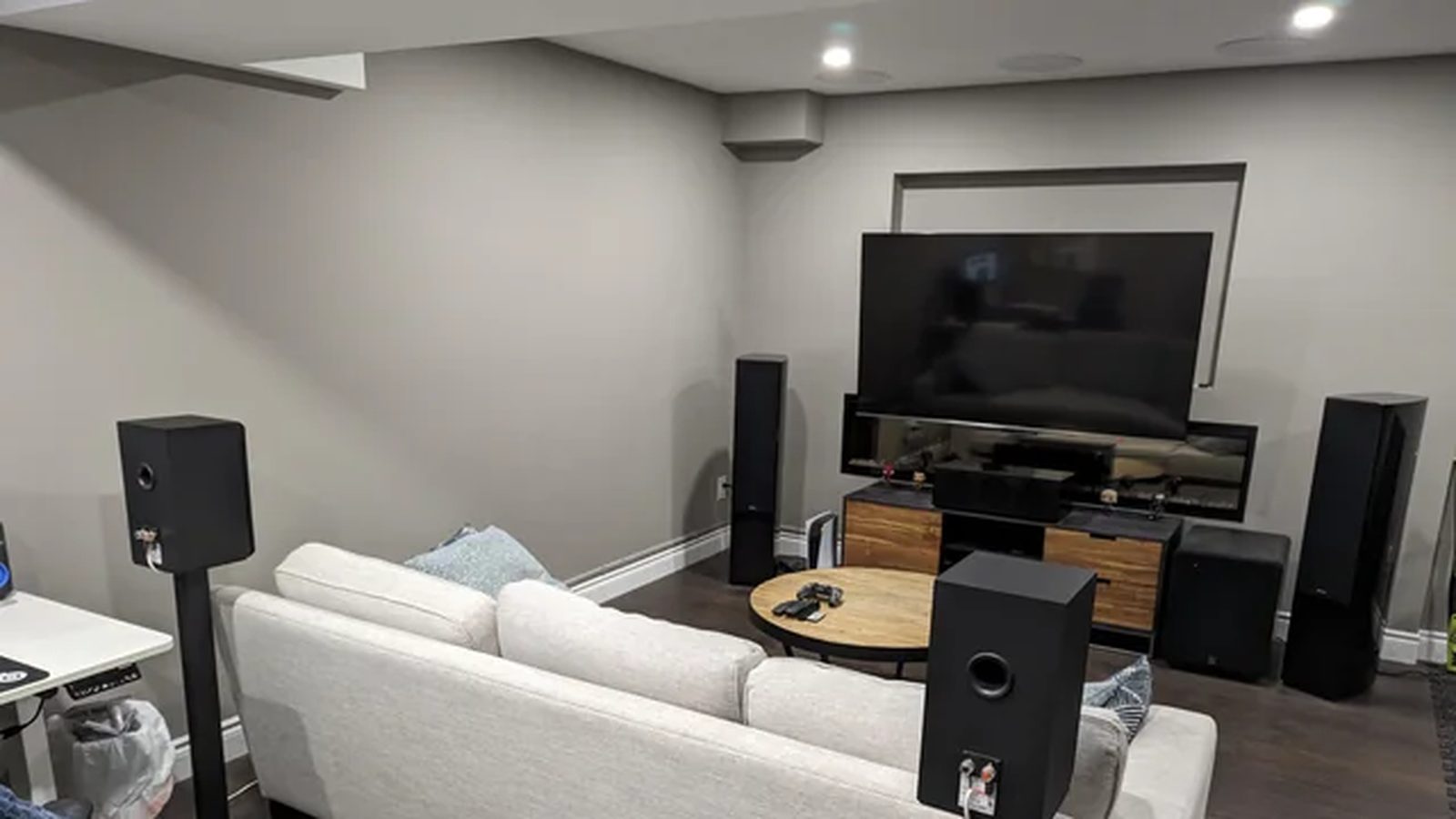
- Floorstanding front speakers, a center channel and a subwoofer placed around the screen and connected to the receiver.
- Source and media console setup so streaming, cable and gaming all run through one place.
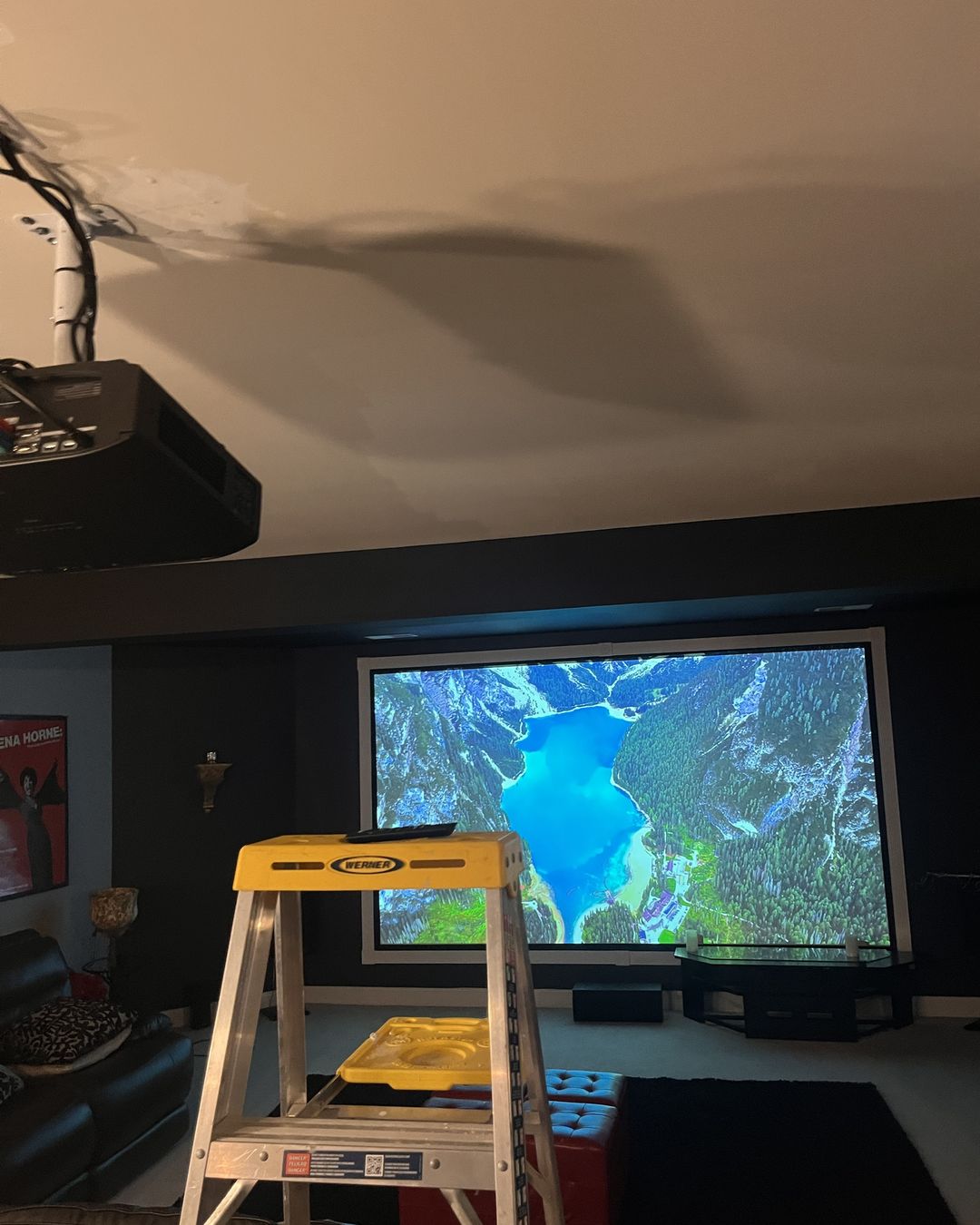
Mid-install: the ceiling-mounted projector being aligned to the screen, with the cables bundled down the mount pole.
The outcome
The finished room has a picture that fills the wall, with bright, saturated color even with some of the recessed lights on, thanks to the dark walls and ceiling. The sound comes from the screen, not from a box on the floor. One remote runs everything, so it works as well for a Tuesday-night show as it does for a movie marathon.
Planning a basement theater?
Finished basements in Loudoun County and across Northern Virginia make some of the best theaters: they're naturally dark, the seating can sit at the right distance, and the ceiling is often accessible for wiring. Read our 2.1 vs. 5.1 vs. 7.1 vs. Atmos guide, or see our home theater installation service and pricing.