What the numbers mean
The first number is how many main speakers you have. The second is how many subwoofers. With Dolby Atmos there's a third number for height speakers. So 5.1 is five speakers and one subwoofer, and 7.1.4 is seven speakers, one subwoofer and four height speakers.
The common layouts
2.1: left, right and a subwoofer
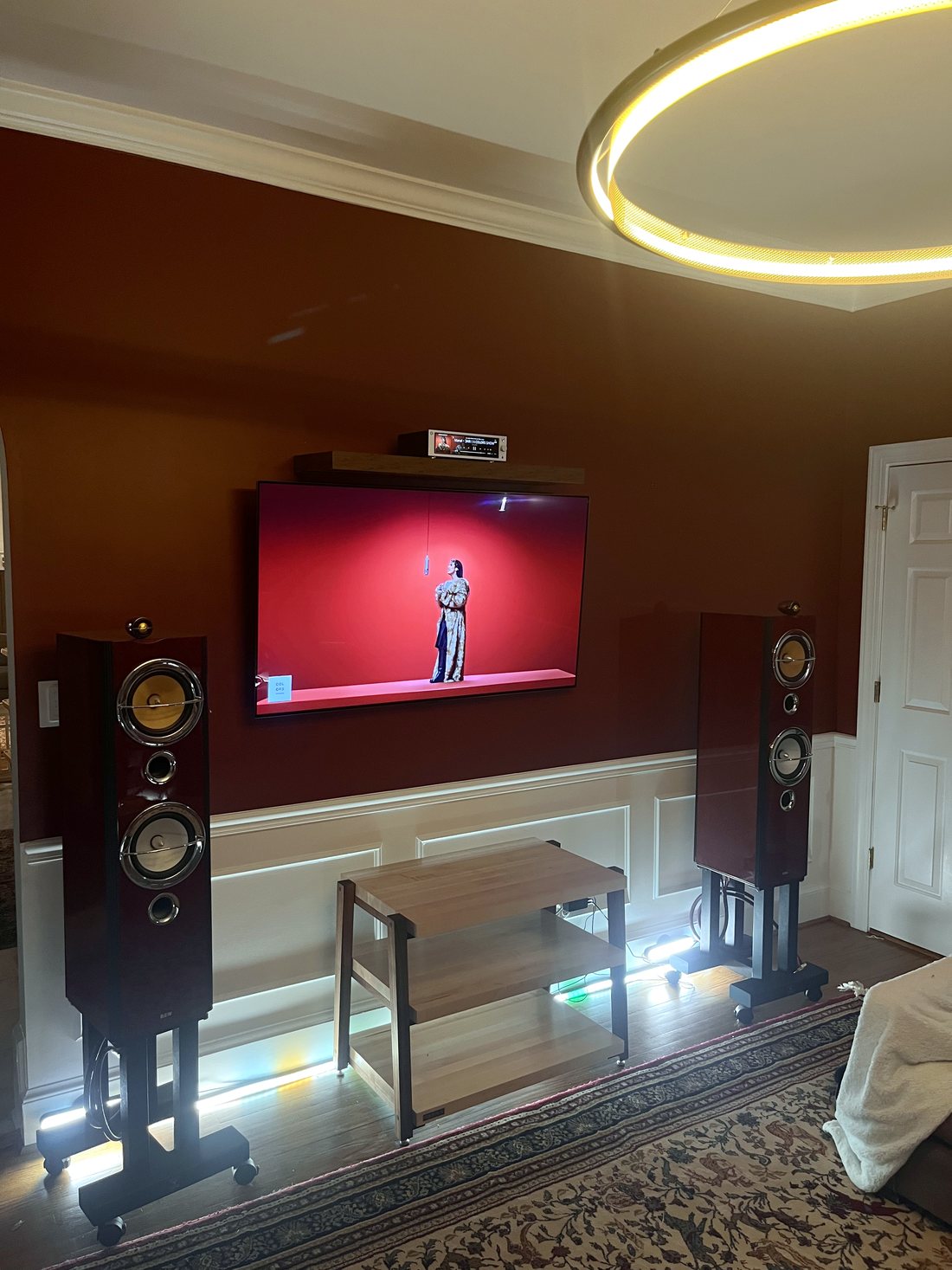
Great for music and small rooms. There's no true surround, but a good 2.1 system beats most TV speakers by a wide margin.
3.1: adds a center channel
The center speaker carries most of the dialogue. If your main complaint is "I can't hear what they're saying," the center channel fixes it.
5.1: the standard surround setup
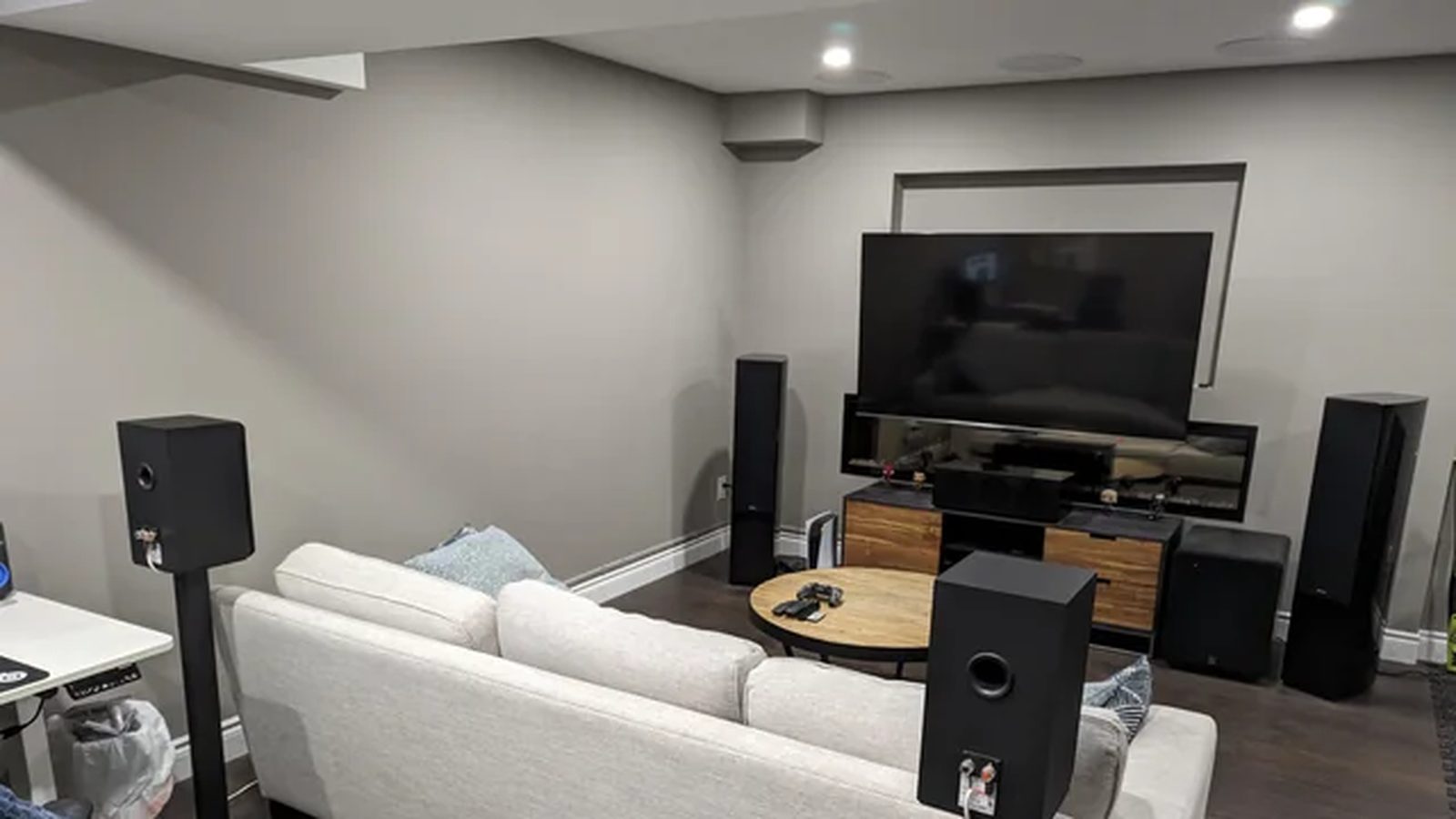
Left, center and right in front, two surround speakers beside or slightly behind your seats, and a subwoofer. This is the right choice for most living rooms and media rooms, and nearly all streaming content supports it.
7.1: adds rear surrounds
Two more speakers behind the seating. It's worth it in larger rooms or when the couch sits well away from the back wall, which is common in the big basements in Ashburn, South Riding and Leesburg.
Dolby Atmos (5.1.2, 5.1.4, 7.1.4)
Atmos adds height speakers so sound can move overhead: rain, helicopters, a stadium crowd. In-ceiling speakers give the best result. Upfiring "Atmos-enabled" modules that bounce sound off the ceiling are an option when you can't cut into the ceiling.
Which layout fits your room?
- Bedroom or small den: 2.1 or a good soundbar.
- Living room or family room: 5.1, with in-wall or in-ceiling surrounds to keep floor space clear.
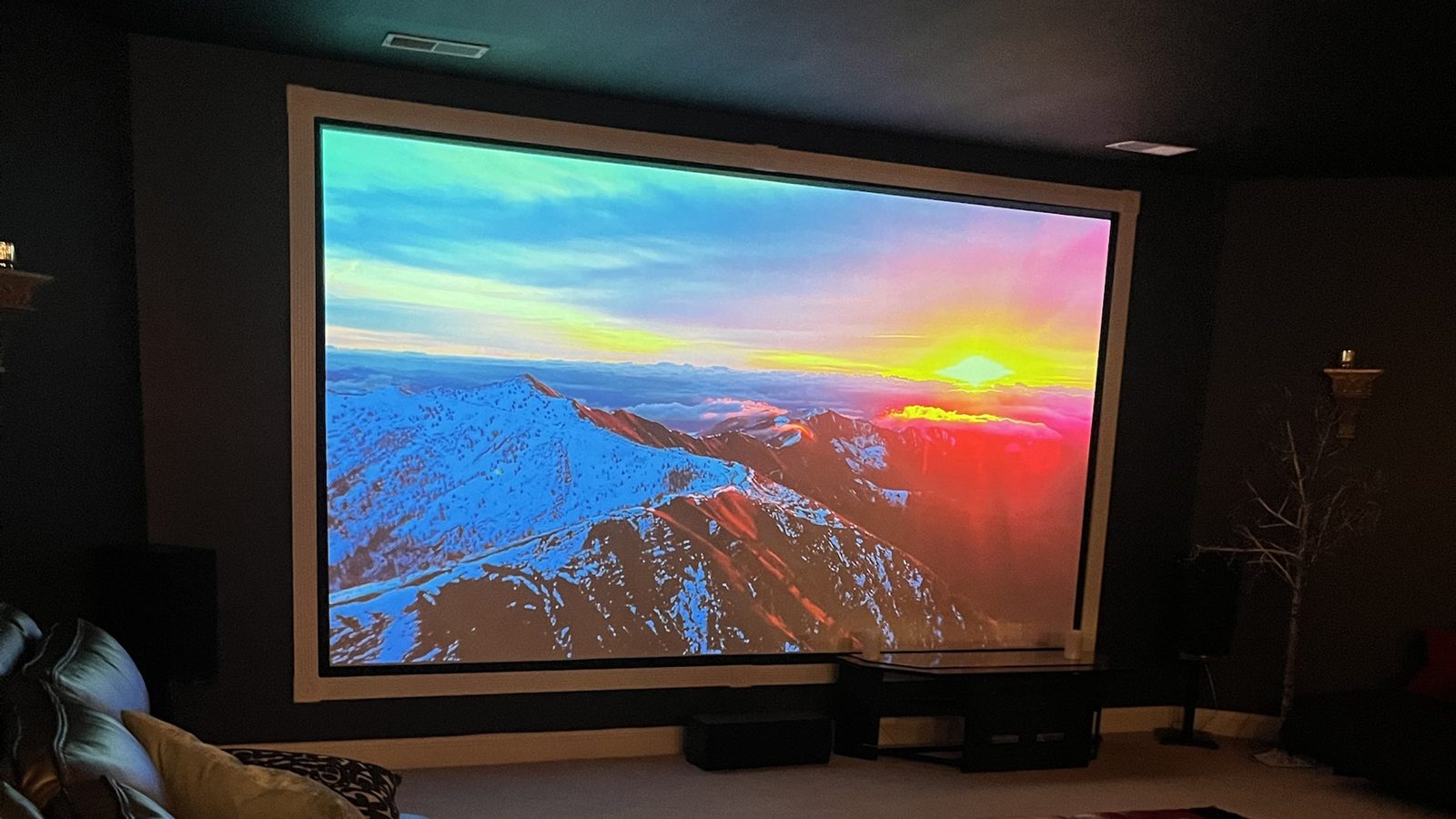
- Large basement or dedicated theater: 7.1 or 5.1.4 Atmos with in-ceiling height speakers.
- Open floor plan: 5.1 with in-ceiling surrounds, since there's often no wall behind the couch.
Speaker placement basics
- Front left and right speakers sit roughly the same distance from your main seat, angled in slightly.
- The center channel goes directly above or below the screen, aimed at ear height.
- Surrounds go to the sides of the main seat, a little above ear height.
- The subwoofer can go almost anywhere, but placement changes the bass a lot. Two subwoofers give smoother bass across more seats.
- After installation, run the receiver's room correction, then fine-tune levels by ear.
Hiding the wires
Surround sound is only as clean as its wiring. In finished homes we fish speaker wire through walls, ceilings and basements so there's nothing along the baseboards. If you're finishing a basement, pre-wire before the drywall goes up. It's the cheapest moment to do it. See home theater installation in Northern Virginia for how we plan and build these rooms.